November 10, 2026
Building Practical AI Skills for Your Team
By @myworkforcelearningunitedmedia
Many teams today are asked to explore generative AI, but few know where to start. Leaders want their people to understand the technology well enough to spot real opportunities and avoid common pitfalls. The challenge is finding training that moves beyond theory into hands-on work with actual tools.
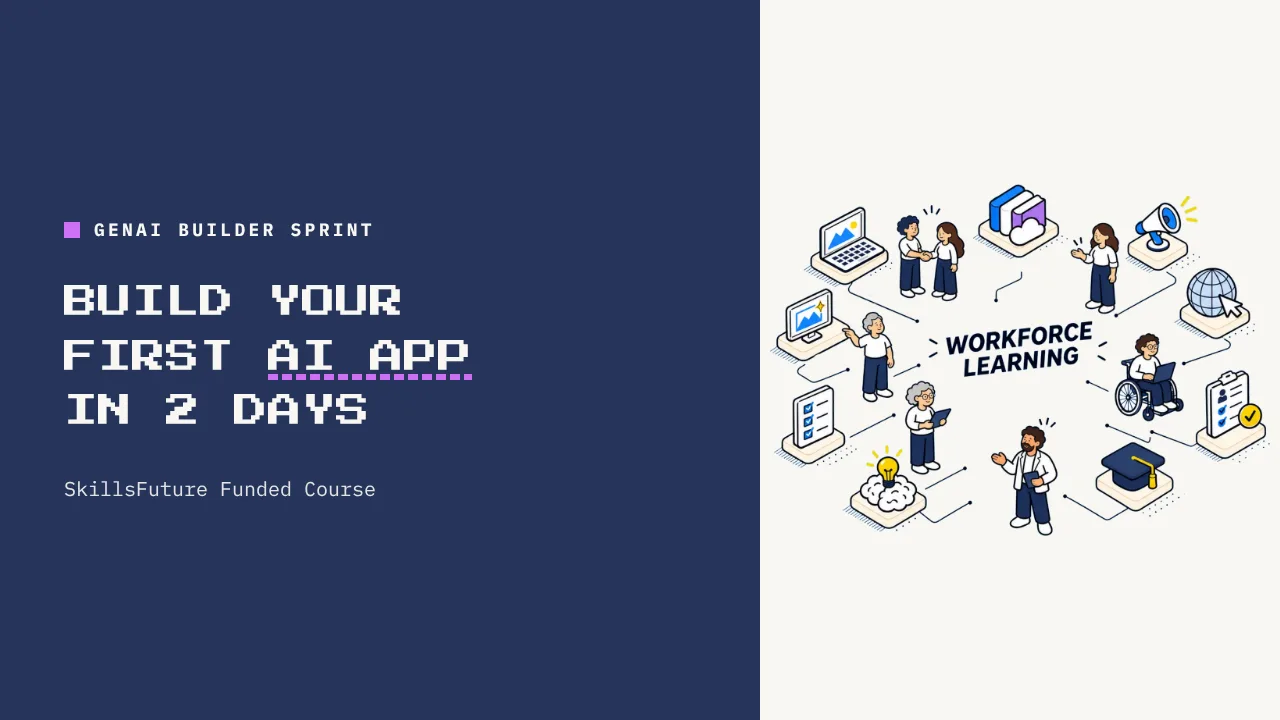
Short, intensive workshops are one solution gaining traction, especially in Singapore where workforce development is a priority. A two-day program that guides adults through building a simple generative AI application, without requiring any coding experience, offers a concrete starting point. This kind of training helps teams grasp not just what AI can do, but how to plan, test, and refine a small project from scratch. Workforce Learning United Ceres College
Why Teams Need Practical AI Training
Generative AI tools have become widely available, but using them effectively in a professional setting is not automatic. Many employees have tried chatbots or image generators on their own. That informal exploration rarely translates into a structured approach for solving work problems. Teams need a shared vocabulary and a repeatable process for evaluating when AI adds value and when it does not.
Training that focuses on building an actual application forces participants to make real decisions: choosing a use case, gathering appropriate data, testing outputs, and iterating on the design. These steps mirror the way software projects unfold, but without the overhead of learning to code. The experience demystifies the technology and builds confidence.
What a Two-Day Generative AI Workshop Can Cover
A well-designed short course compresses the essentials into a clear workflow. The first day typically covers the fundamentals of how generative models work, what they are good at, and where they tend to fail. Participants then pick a simple problem to solve and begin planning their application.
The second day moves into building and testing. Using no-code platforms or pre-built interfaces, teams assemble a working prototype. They test it against real scenarios, identify weaknesses, and make adjustments. The final step is preparing a plan for launching a small pilot in their own work environment.
This structure works because it respects the constraints of busy professionals. There is no time to get lost in theory or distracted by tools that are not relevant to the task at hand. Every activity points toward a tangible outcome by the end of the second day.
Choosing the Right Training Provider
Not all AI training for teams is created equal. The best programs share a few characteristics. They are taught by instructors who have built real applications, not just studied AI in the abstract. They use current tools that reflect what is available in the market. And they include time for hands-on work, not just lectures.
One option worth considering is the program offered by Workforce Learning United Ceres College. Their two-day course is designed specifically for adults with no technical background, focusing on the complete cycle of planning, building, testing, and launching a generative AI app. The approach aligns with the needs of Singapore-based teams who want practical skills they can apply immediately.
When evaluating any training, ask about the ratio of hands-on time to lecture time. Look for courses that require participants to bring a real problem from their own work, so the learning is directly relevant. Also check whether the training includes a post-workshop support option, such as access to instructors or a community of peers, for when questions arise after the course ends.
Common Pitfalls in Team AI Training
Even a good program can fail if the team is not prepared. One common mistake is treating AI training as a one-off event rather than the start of an ongoing capability. A two-day workshop builds momentum, but teams need to follow up with practice and small projects to cement the learning.
Another pitfall is expecting the training to turn everyone into an expert. The goal should be to give team members enough understanding to collaborate with specialists and to evaluate AI proposals critically. Deep technical expertise takes much longer to build and is not necessary for most roles.
A third issue is neglecting the human side of adoption. Teams that learn to build a prototype also need to discuss ethics, bias, and the limits of the technology. Good training addresses these topics directly, not as an afterthought but as part of the design process.
What to Look for in a Curriculum
A strong curriculum for AI training for teams covers several core areas:
- Understanding generative AI models and their capabilities
- Identifying suitable use cases in your own work context
- Planning an application: defining inputs, outputs, and success criteria
- Building a prototype using no-code or low-code tools
- Testing the prototype and interpreting results
Each of these steps should be taught through demonstration and then practiced by participants. The best programs avoid overloading the schedule with too many tools or frameworks. Depth on one or two platforms is more valuable than a shallow tour of many.
The training provided by Workforce Learning United Ceres College follows this kind of focused curriculum. Their instructors guide participants through the entire build process, from initial idea to a working prototype, all within the two-day window. This hands-on approach helps teams leave with something they can show and explain to colleagues.
Making the Most of Team Training
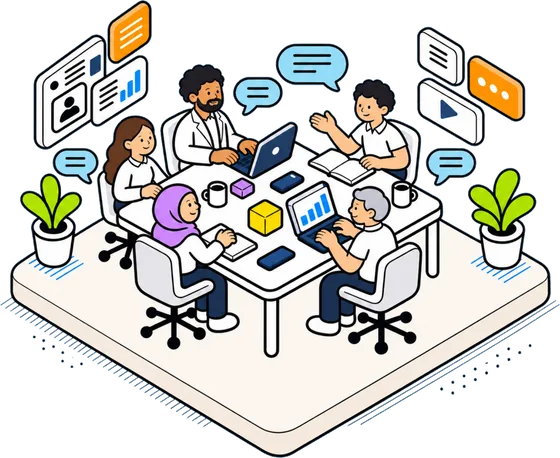
To get full value from a short course, send a small cross-functional team rather than a single person. A group of two to four people from different departments can collaborate on a project during the workshop and then champion the learning back in their respective teams. This also helps with knowledge retention, because colleagues can reinforce each other's learning after the course ends.
Before the training, ask each participant to identify one or two processes in their work that are repetitive or rule-based. These are often good candidates for a generative AI prototype. Having a concrete problem in mind makes the workshop more productive and increases the chance of a usable outcome.
After the training, schedule a follow-up session within two weeks where the team reviews what they built and discusses next steps. This could be a simple show-and-tell or a planning meeting for a small pilot. The key is to maintain momentum before the daily routine pushes the new skills aside.
Looking Ahead
Generative AI is evolving rapidly, but the fundamental skill of building and testing a small application is likely to remain valuable. Teams that invest in practical training now will be better positioned to adapt as the technology matures. The goal is not to master every new tool, but to develop a method for evaluating and applying AI solutions to real problems.
A two-day course cannot cover everything, but it can give a team the confidence and process they need to start. From there, learning becomes a continuous cycle of building, testing, and refining. That is the kind of capability that makes a difference over the long term.
Workforce Learning United Ceres College on social media
 Twitter
 LinkedIn
 Facebook
 Instagram
 YouTube
❧